

Key Takeaway
Navigating the complex world of taxes often begins with understanding tax brackets, a critical element that can significantly impact your financial health. Many taxpayers have misconceptions about how tax brackets function, mistakenly believing that moving into a higher bracket means losing a large portion of their income to taxes. In reality, tax brackets are designed to apply progressively, ensuring that only the income exceeding each threshold is taxed at the higher rate. This nuanced system plays a pivotal role in determining your overall tax liability and potential savings.
Navigating the complex world of taxes often begins with understanding tax brackets, a critical element that can significantly impact your financial health. Many taxpayers have misconceptions about how tax brackets function, mistakenly believing that moving into a higher bracket means losing a large portion of their income to taxes. In reality, tax brackets are designed to apply progressively, ensuring that only the income exceeding each threshold is taxed at the higher rate. This nuanced system plays a pivotal role in determining your overall tax liability and potential savings.
As we look ahead to 2026, taxpayers are eager to understand how upcoming changes in federal tax brackets could affect their financial plans. Properly mastering the intricacies of tax brackets not only clarifies the amount owed but also uncovers strategies for minimizing tax burdens and maximizing financial benefits. By demystifying these often-confusing concepts, individuals can make informed decisions, optimize their tax situations, and ultimately retain more of their hard-earned money.
Understanding Tax Brackets and Their Importance
Navigating tax brackets can seem daunting, but understanding them is vital for effective tax planning. Tax brackets are a cornerstone of the U.S. progressive tax system, where different portions of your income are taxed at increasing rates. This means that as your income rises, you’ll be subject to higher tax rates on each subsequent portion of your income, rather than on your entire income. The marginal tax rate is the rate at which your last dollar of income is taxed, which can significantly impact your tax liability.
Knowing your tax bracket is crucial for several reasons. It helps you anticipate your tax obligations and plan your finances more effectively. For example, understanding where your income falls within the IRS guidelines can inform decisions regarding deductions and credits, potentially reducing your taxable income. Additionally, being aware of these brackets enables you to make strategic financial decisions, such as retirement contributions or charitable donations, that can keep you in a lower tax bracket. By staying informed, you can make more educated decisions that align with your financial goals.
Learn more about our Tax Services.
Learn more about our Tax Office.
Learn more about our SCL Tax Services Privacy Policy and Terms Of Use.
Learn more about our U.S. tax brackets information.
2026 Federal Tax Brackets: What to Expect

As we look ahead to 2026, understanding the anticipated federal tax brackets is crucial for effective tax planning. Tax brackets determine the rate at which your income is taxed, and they can significantly affect your financial responsibilities. For single filers, the income thresholds are expected to see modest adjustments. Those earning up to $10,000 may fall into the lowest bracket, while higher income levels will be taxed at escalating rates. The highest tax rate could apply to incomes exceeding $500,000, although these figures are subject to inflation adjustments.
Single Filers
Single taxpayers will encounter a tiered system where different portions of their income are taxed at varying rates. The starting point for the lowest tax bracket may begin around $10,000, with percentages increasing as income rises.
Married Couples Filing Jointly
For married couples filing jointly, income thresholds are generally higher, reflecting combined earnings. The initial bracket might commence at incomes up to $20,000, with subsequent brackets applying to higher earnings. It’s important to note the role of the standard deduction, which reduces taxable income, potentially shifting a couple’s effective tax bracket downward.
Understanding these income thresholds and tax rate percentages can help taxpayers anticipate their liabilities and make informed financial decisions.
Strategies to Optimize Your Tax Bracket
Optimizing your tax bracket involves strategic planning to manage income and deductions effectively. One approach is income shifting, which allows you to distribute income across different family members or tax years. For example, if you own a business, paying a salary to a family member can reduce your taxable income. Similarly, deferring income to the following year may help you stay in a lower tax bracket this year.
Maximizing deductions is another critical strategy. By increasing your charitable donations, you can reduce your taxable income while supporting causes you care about. Additionally, tax credits can directly reduce the amount of tax you owe, making them more valuable than deductions. Consider contributions to retirement accounts like a 401(k) or IRA, which can lower your taxable income and provide savings for your future.
Here are some strategies to consider:
- Retirement contributions: Max out your 401(k) or IRA.
- Charitable donations: Keep records to claim deductions.
- Tax credits: Explore available options for energy efficiency, education, and more.
Implementing these strategies can help you optimize your tax bracket and potentially lower your tax liability.
Navigating the Alternative Minimum Tax (AMT)
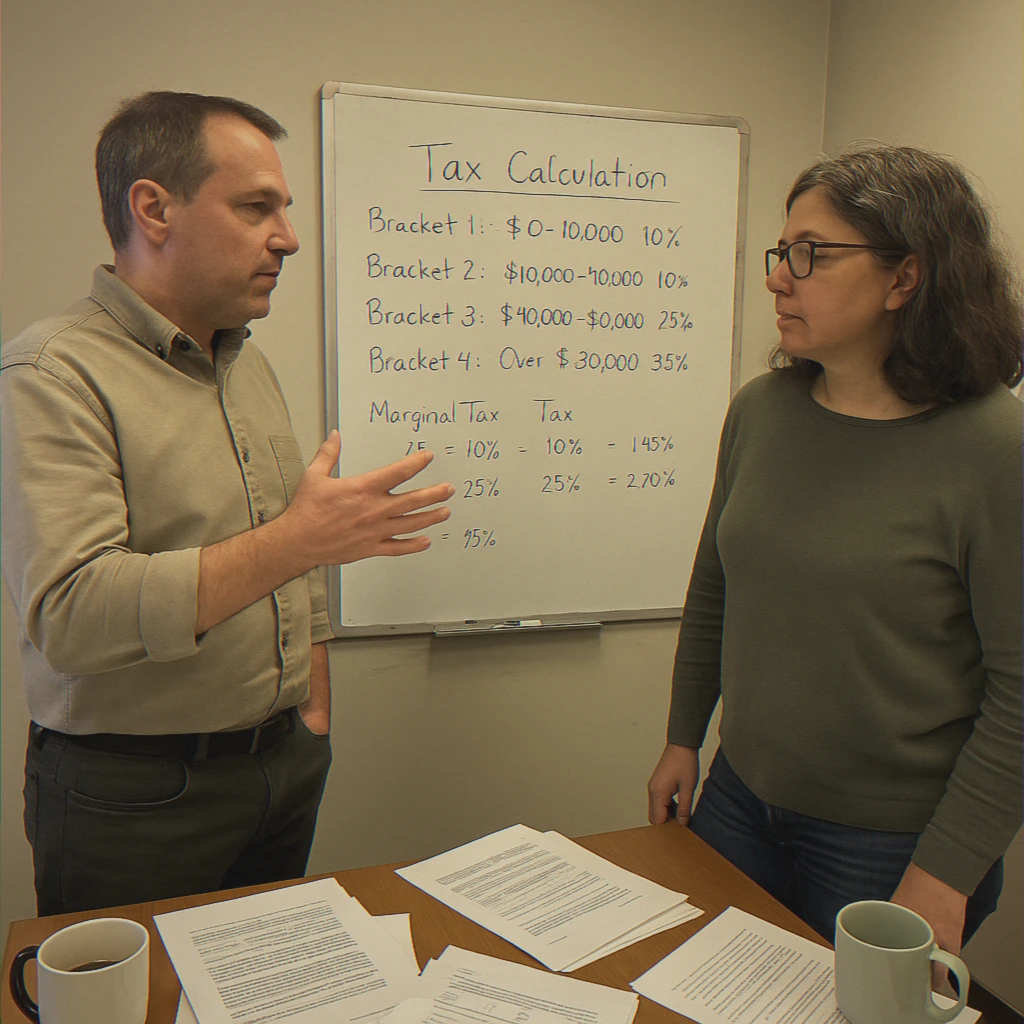
The Alternative Minimum Tax (AMT) is a parallel tax system designed to ensure that high-income individuals pay a minimal level of tax, regardless of deductions or credits. Unlike the regular tax system, the AMT disallows certain deductions, such as state and local taxes, which can lead to a higher taxable income. Understanding the AMT’s impact is crucial for effective tax planning, as it can significantly alter your financial obligations.
What is the AMT?
The AMT was established to prevent wealthy taxpayers from using loopholes to reduce their tax liabilities. It applies an alternative set of rules to calculate tax liability, often resulting in a higher amount than the regular tax system. Taxpayers must calculate their taxes under both systems and pay the higher of the two.
AMT Exemptions and Thresholds
AMT exemptions are crucial in determining whether you are subject to this tax. For 2023, the exemption amounts are $81,300 for singles and $126,500 for married couples filing jointly. However, these exemptions phase out at higher income levels, starting at $578,150 for individuals and $1,156,300 for couples. To calculate your AMT liability, use IRS Form 6251, which helps determine your taxable income under this system. Understanding these elements is key to effectively navigating the AMT.

Frequently Asked Questions
How do I determine my tax bracket in Bronx?
To determine your tax bracket in Bronx, calculate your taxable income by subtracting deductions from your gross income. Use the IRS tax tables for the current year to identify which bracket your income falls into, as brackets can change annually based on income levels.
What are the current tax brackets for Bronx residents?
For 2023, Bronx residents face federal tax brackets ranging from 10% to 37%. Specifically, income up to $11,000 is taxed at 10%, while income exceeding $578,125 is taxed at 37%. State and local taxes may apply, affecting overall tax liability.
How can I lower my tax bracket effectively?
Lower your tax bracket by maximizing deductions and credits. Contributing to retirement accounts, such as a 401(k) or IRA, can reduce taxable income. Additionally, consider itemizing deductions for mortgage interest or charitable contributions, which can significantly lower your overall tax liability.
What should I do if I fall into a higher tax bracket unexpectedly?
If you unexpectedly fall into a higher tax bracket, review your income sources to identify any spikes. Consider adjusting withholding allowances or making estimated tax payments to manage tax liabilities. Consulting a tax professional in Bronx can provide tailored strategies to mitigate the impact.
Ready to Grow Your Business?
Our team delivers real, measurable results — no long-term lock-ins, just smart strategy and consistent execution.