
Key Takeaway
Navigating the complexities of income taxes can be a daunting task for any business, but the stakes are even higher when significant changes occur. As Westchester businesses prepare for the 2026 tax season, understanding the nuances of 1099 reporting is crucial for maintaining compliance and optimizing financial strategies. With the advent of new regulations and forms, businesses must stay informed to avoid costly mistakes that could impact their bottom line.
Navigating the complexities of income taxes can be a daunting task for any business, but the stakes are even higher when significant changes occur. As Westchester businesses prepare for the 2026 tax season, understanding the nuances of 1099 reporting is crucial for maintaining compliance and optimizing financial strategies. With the advent of new regulations and forms, businesses must stay informed to avoid costly mistakes that could impact their bottom line.
The landscape of 1099 reporting is evolving, and businesses need to adapt to these changes to ensure they meet all legal requirements. As the Internal Revenue Service updates its guidelines, Westchester businesses must be proactive in managing their filings. This involves not only recognizing the key differences in 1099 forms for 2026 but also implementing effective management strategies and avoiding common reporting errors. By staying ahead of these changes, businesses can protect themselves from potential penalties and make informed decisions that benefit their financial health.
Understanding the 2026 1099 Reporting Landscape
In 2026, significant changes to the 1099 reporting process will reshape how businesses in Westchester manage their income taxes. The IRS has introduced new guidelines that aim to streamline reporting while enhancing compliance. These adjustments may include updated thresholds for reporting and additional categories requiring disclosure on the 1099 form. Such changes are designed to improve the accuracy of reported income and ensure all taxable income is captured under IRS compliance standards.
For local businesses in Westchester, these changes present both challenges and opportunities. Adapting to the new requirements will be essential for maintaining compliance and avoiding potential penalties. Westchester businesses may need to invest in updated accounting software or consult with tax professionals to ensure they meet the revised regulations effectively. Understanding the specifics of these changes now can help businesses prepare adequately, reducing the risk of errors.
For detailed guidance on how to navigate these changes, and to schedule a tax consultation, visit SCL Tax Services in & near Bronx, NY.. Our experts are ready to assist with all your 1099 reporting needs.
Key Differences in 1099 Forms for 2026
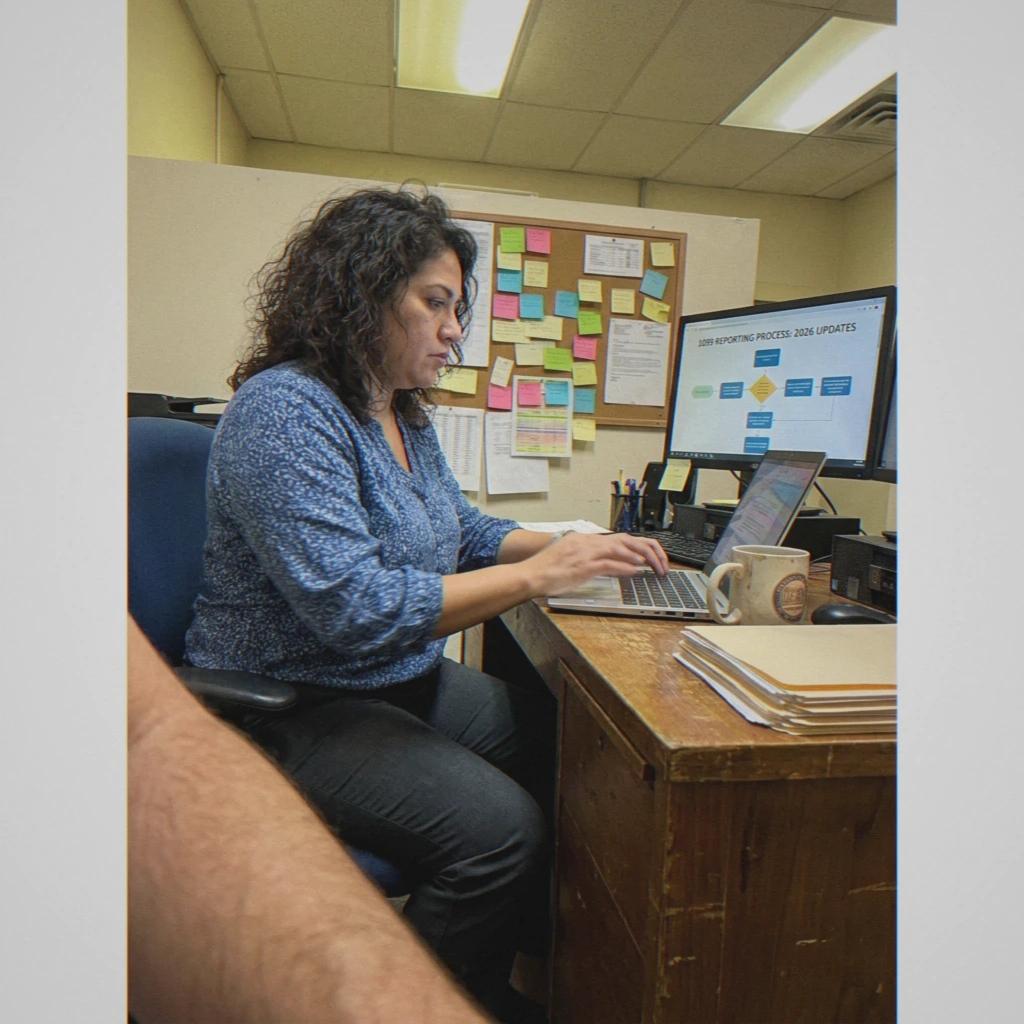
The 2026 tax year brings notable changes to the 1099 forms, impacting how businesses in Westchester should approach their income taxes. One significant update is the distinction between the 1099-NEC and the 1099-MISC forms. The 1099-NEC form, introduced in recent years, continues to be the primary form for reporting non-employee compensation. This form is particularly relevant for independent contractors and freelancers, ensuring that businesses accurately report payments made to them.
Form Variations
The 1099-MISC form has undergone modifications to clarify its use. It now focuses on miscellaneous income types, such as rent or royalties, and excludes non-employee compensation, which remains under the 1099-NEC. Understanding these variations is crucial for businesses to avoid misfiling.
New Reporting Requirements
Another critical change is the adjustment of reporting thresholds. With lower thresholds, more transactions will require reporting, increasing the administrative burden on businesses. It is essential for companies to stay informed of these changes to ensure compliance and avoid potential penalties. For guidance, our tax professionals are available to assist businesses in navigating these updates effectively.
Strategies for Effective 1099 Management
Efficient 1099 management is crucial for businesses to maintain compliance and prevent financial penalties. A key strategy involves organizing financial records meticulously. Businesses should ensure all transactions are accurately recorded and relevant documents are easily accessible. This practice not only simplifies the 1099 reporting process but also supports comprehensive record-keeping, which is essential for verifying income and expenses.
Another effective approach is utilizing tax software. Advanced tax software solutions can automate many aspects of 1099 management, from tracking income to generating necessary forms. These tools can significantly reduce the risk of errors and help manage deadlines effectively. Missing a deadline can lead to fines, making it imperative to have a system in place that alerts businesses to upcoming due dates.
To further streamline the process, consider establishing a schedule for regular reviews of financial transactions and tax obligations. Implementing these strategies can minimize the chances of oversight and enhance overall tax compliance. For personalized assistance, businesses can schedule a tax consultation with our expert tax professionals. Explore more about our Tax Services and how we can assist you.
Learn more about our SCL Tax Services Privacy Policy and Terms Of Use.
Common Mistakes to Avoid in 1099 Reporting

Inaccurate 1099 reporting can lead to significant issues for businesses, including penalties and IRS audits. One of the most frequent errors is incorrect filings. This includes using the wrong form, misclassifying workers, or entering incorrect taxpayer identification numbers. To avoid these mistakes, ensure that all information is thoroughly verified before submission. Consistent record-keeping throughout the year can also help businesses maintain accuracy and reduce the risk of errors.
Another common pitfall is missed deadlines. The IRS typically requires 1099 forms to be filed by January 31st for recipient copies and by February 28th (or March 31st if filed electronically) for IRS copies. Missing these deadlines can result in late filing penalties. To prevent this, businesses should establish a timeline for preparing and submitting 1099s well in advance of the due dates.
Taking corrective actions promptly when an error is identified is crucial. If a mistake is discovered, businesses should quickly file a corrected 1099 to mitigate potential penalties. For more personalized assistance, consider reaching out to SCL Tax Services in & near Bronx, NY. to ensure compliance and accuracy in your reporting.
Leveraging Professional Tax Services for Compliance
Navigating the complexities of 1099 reporting can be daunting for Westchester businesses, especially with the upcoming changes in 2026. Utilizing professional tax services like those offered by SCL can significantly ease the compliance process. Our expert assistance ensures that businesses stay up-to-date with the latest regulations, reducing the risk of costly mistakes.
You can also explore our our local offices for details.

Frequently Asked Questions
What are the new 1099 reporting requirements for Bronx businesses in 2026?
The new 1099 reporting requirements for Bronx businesses in 2026 mandate that payments exceeding $600 to independent contractors must be reported. This change aims to increase transparency and compliance with income taxes, ensuring that all income is accurately reported to the IRS.
How will the 1099 changes impact my income taxes as a Bronx business owner?
The 1099 changes will likely increase your income tax obligations if you fail to report all contractor payments. Accurate reporting ensures compliance and helps avoid penalties, making it essential for Bronx business owners to maintain thorough records of all payments made to contractors throughout the year.
What steps should Bronx businesses take to prepare for 1099 reporting changes?
Bronx businesses should start by reviewing their payment processes and ensuring they have accurate records of contractor payments. Implementing an accounting system that tracks these payments will facilitate compliance with the new 1099 reporting requirements, ultimately simplifying the income tax filing process.
Are there penalties for not complying with the new 1099 reporting rules in the Bronx?
Yes, penalties for non-compliance with the new 1099 reporting rules can range from $50 to $550 per form, depending on how late the forms are filed. Bronx businesses must adhere to these changes to avoid significant penalties and ensure accurate income tax reporting.
Ready to Grow Your Business?
Our team delivers real, measurable results — no long-term lock-ins, just smart strategy and consistent execution.